
Fewer Carbs, More Exercise? 5 Tips for PMOS That Actually Suit You
You are sitting at your gynecologist’s, hear “PMOS” for the first time and go home with two sentences: “Take the pill” and “Eat fewer carbs and exercise more.” In the evening on the sofa you then find a list on Instagram with eighteen superfoods, twelve supplements and fifteen no-gos.
Honestly: I know this not only from coaching but from my own story. I was diagnosed with PMOS too, together with Hashimoto’s, and I was told I would never have a natural cycle.
I am Lina, a state-certified nutrition consultant, health coach for women’s health and an expert in cycle loss. There are no rules for PMOS (formerly PCOS) that fit everyone. In this article I share five tips that help many women and explain when they suit you if you want to get your period back.
What PMOS actually is, how it is diagnosed and why very different causes can hide behind the same name is explained in my article What is PMOS?
What to expect
- 🥗 1. Combine carbs instead of cutting them
- 🍳 2. Eat breakfast, even before you feel hungry
- 🏃 3. Movement: a walk instead of a punishment lap
- 🧘 4. Stress: manage it well instead of sinking into chaos
- 🩸 5. Blood test instead of a supplement list
- 🤰 Vroni: 17 years without a period, pregnant today
- 💛 My story with PMOS
🥗 1. Combine carbs instead of cutting them
“Fewer carbs, more exercise”: hardly any sentence comes up as often with PMOS. For women with pronounced insulin resistance an adjustment can make sense. But many women with PMOS are slim, move a lot and already eat little.
For them, “even less, even more” is often exactly the wrong way. The body then gets an additional signal of scarcity, and scarcity is stress for your cycle. Instead of cutting carbs, many women benefit from combining them wisely: together with protein, fat and fibre, so your blood sugar doesn’t ride a rollercoaster.
My pro tip: Move lightly for 10 minutes after eating, for example while doing the dishes or hanging up laundry. Your muscles take up sugar from the blood, and your blood sugar rises less. No workout needed.
🍳 2. Eat breakfast, even before you feel hungry
My tip: eat a meal with at least 20 g of protein 30 to 60 minutes after getting up. Protein keeps your blood sugar steadier in the morning and keeps you full for longer, and your body gets the signal early in the day that there is enough. If you aren’t hungry yet in the morning, start small, for example with a yoghurt or a couple of eggs, and build up.
I find a study on this with slim women with PMOS fascinating: those who ate most of their energy in the morning had better insulin levels, less free testosterone and ovulated more often, with the same total amount. Breakfast is not a luxury, it is a signal of safety.
How to put your meals together so that your cycle is nourished is explained in detail in this article on nutrition when your period is missing.
Free Hormone Signal Check
Find out within 5 minutes which of the 3 hormone traps you are currently stuck in.
🏃 3. Movement: a walk instead of a punishment lap
Movement does you good with PMOS, but the dose and the intention decide. Hours of cardio and hard intervals late in the evening tend to be one more stressor for a stressed body.
What many women with PMOS benefit from
Walks, ideally after meals: they help your blood sugar, without any performance pressure.
Strength training in moderation: muscles improve insulin sensitivity, and your own body weight is enough to start with.
Intense training only in doses: HIIT as the exception, not a daily duty.
Taking rest seriously: rest is productive too when your goal is your cycle.
How I found my own way from excessive training to intuitive movement is in my article on exercise and a missing period.
🧘 4. Stress: manage it well instead of sinking into chaos
Your body is smart. When it constantly reports stress, through performance pressure, too little sleep, too little food or unprocessed feelings, it puts survival before reproduction. Ovulation is then simply not on the agenda.
That doesn’t mean you now have to rush to yoga at seven in the morning. It often helps more to leave something out than to add something.
Your first step
Go outside into daylight for a few minutes in the morning before you look at your phone, and set a fixed time in the evening after which you are no longer reachable. Watch what changes over two weeks.
🩸 5. Blood test instead of a supplement list
Turmeric, cinnamon, flaxseed, spearmint, plus twelve supplements and a list of foods to avoid from now on. Welcome to the loop: every new list is one more puzzle piece while the picture on the box is missing.
I deliberately don’t give you supplement recommendations here. Not because nutrients don’t matter, but because a blood test tells you more than any list. Have your vitamin D level and thyroid values checked, for example, and if insulin resistance is suspected, ask for insulin to be measured during the glucose tolerance test where possible, not only blood sugar.
New diagnosis new list new rules even more pressure the body feels even less safe
And new bans are rarely the solution for a body that needs safety. Especially if you have an eating disorder behind you, a long no-go list can wake up old patterns.
You have a PMOS diagnosis and don’t know which tip actually suits you? In the free Cycle Clarity Call, we’ll look together at what is behind it for you.
To the free Cycle Clarity Call🤰 Vroni: 17 years without a period, pregnant today
Vroni shows me how much is possible. She had no period for 17 years, plus PMOS, digestive problems and a sluggish thyroid, and she had been told she would simply have to live with it.
We didn’t give her a perfect meal plan or ban exercise, we went to where everything had its roots. Her period came back, her ovulation too, and today Vroni is pregnant.
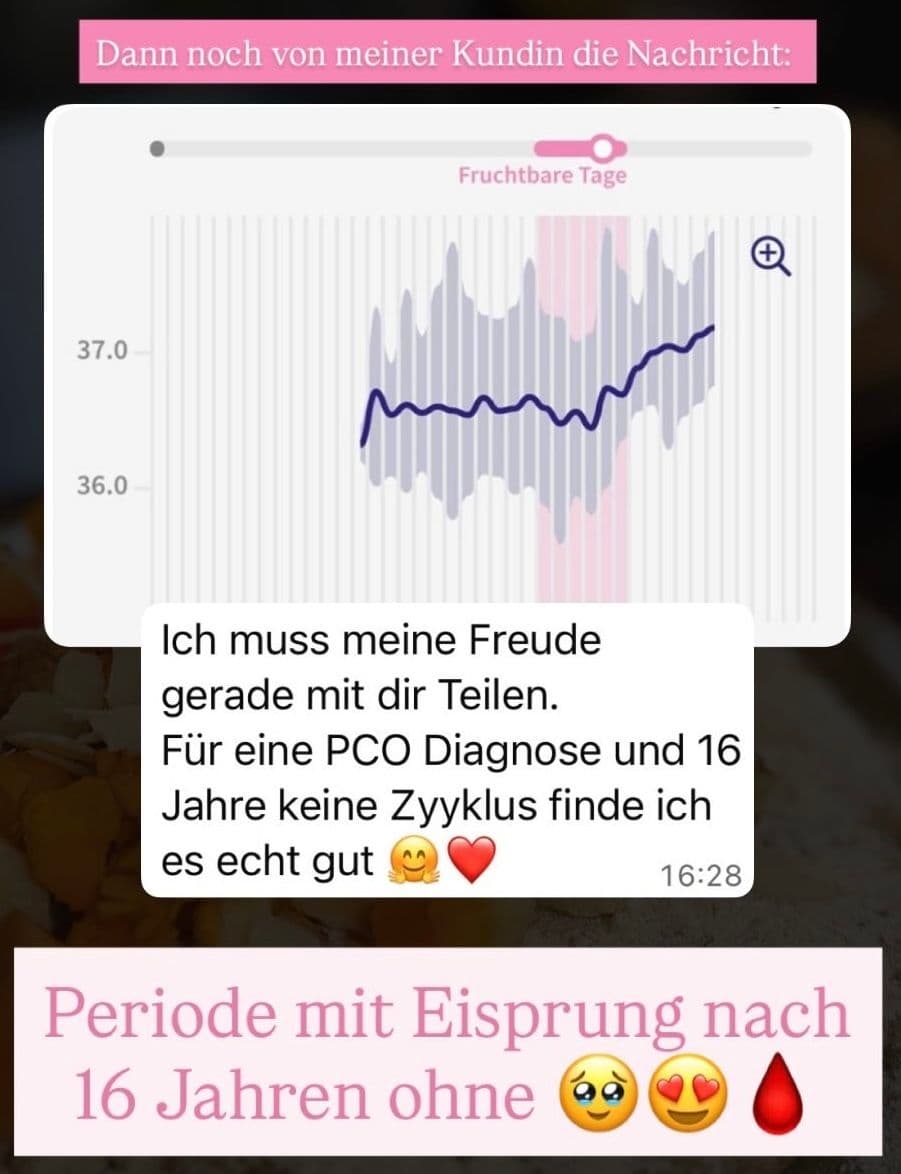
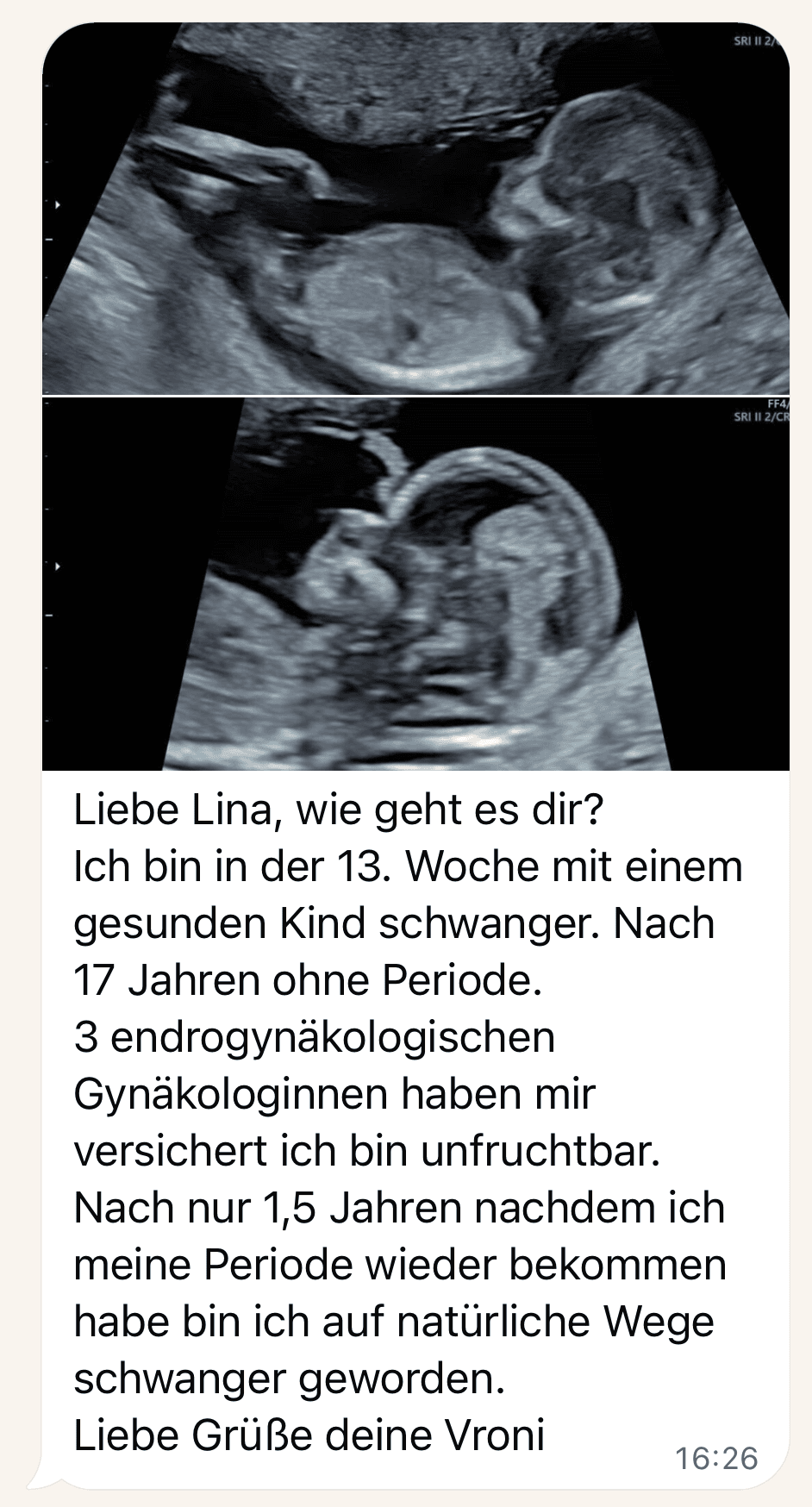
You can read her whole story here: Getting your period back after an eating disorder: Vroni’s experience.
💛 My story with PMOS
For a while I was on hormone replacement therapy because nobody believed I would have a natural cycle again. Today, despite a PMOS and Hashimoto’s diagnosis, I have a wonderful cycle.
That is my story and not a promise. But it shows me every day: a diagnosis is a starting point, not a verdict. Your body is not your enemy, it just needs someone to look more closely at what is behind it for you.
There are no PMOS rules that fit everyone. There is only your body and the question of what it needs right now.
If you want to find out what is behind it for you, I’d love to look at your story together.
Would you like to talk with me about your challenges and goals and get your first impulses for your journey?
To the free Cycle Clarity CallSources & further reading
- Teede HJ et al. (2023): Recommendations from the 2023 International Evidence-based Guideline for the Assessment and Management of Polycystic Ovary Syndrome. J Clin Endocrinol Metab, 108(10), 2447–2469.
- Jakubowicz D et al. (2013): Effects of caloric intake timing on insulin resistance and hyperandrogenism in lean women with polycystic ovary syndrome. Clin Sci, 125(9), 423–432.
- Gordon CM et al. (2017): Functional Hypothalamic Amenorrhea: An Endocrine Society Clinical Practice Guideline. J Clin Endocrinol Metab, 102(5), 1413–1439.
Happy, Healthy & Confident into the new week.
Every Monday — insights on cycle, hormones & female health. Straight to your inbox.